Drugs & Culture:
A Unique Undergraduate Experience
The “War on Drugs” represents one of the most significant policy failures in the history of the United States. Formally declared by President Nixon in 1971, this punitive approach to recreational drug use was never based on empirical evidence or public health principles, but rather scapegoated drugs to advance racist, xenophobic ideologies, and legitimize forms of social control. The War on Drugs is enacted through policies that criminalize drug use and dispro-portionately incarcerate Black and Brown communities. Being convicted of a drug felony can further impact lives through the denial of housing, education, and other social safety net programs that help people thrive.
Further, the stigma of drug use often prevents people from accessing healthcare and other services. Drug policy thus plays an important role in shaping our collective health, yet, we don’t educate very well on it, which leads to a naturalization of punitive approaches and perpetuates harmful ideas about drugs and the people who use them. While empirical research shows that fear-based education programs like DARE are ineffectual, most undergraduate students report first learning about drugs from police in their elementary and high school classrooms.
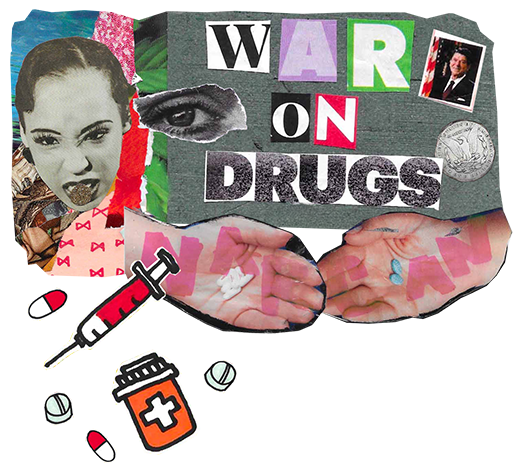

As educators and as community members, we need to develop new ways of teaching about drug use and drug policy that engender empathetic understanding and are oriented away from carceral systems of punishment and toward a social justice lens that can inspire healing and substantive change.

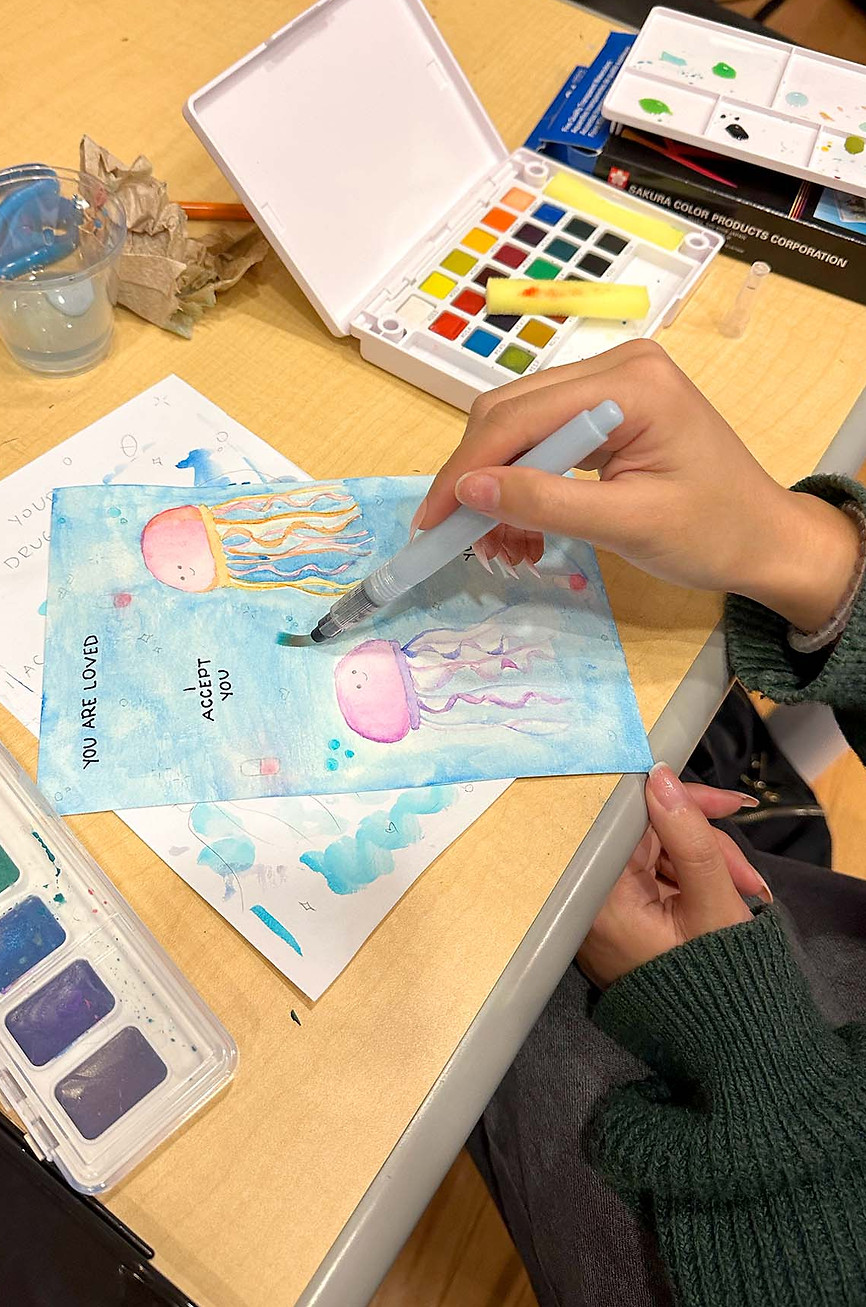
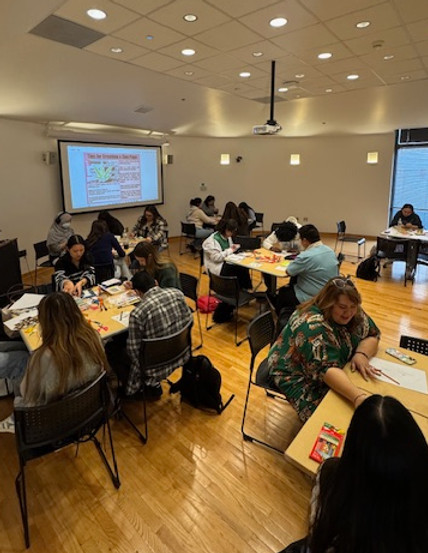


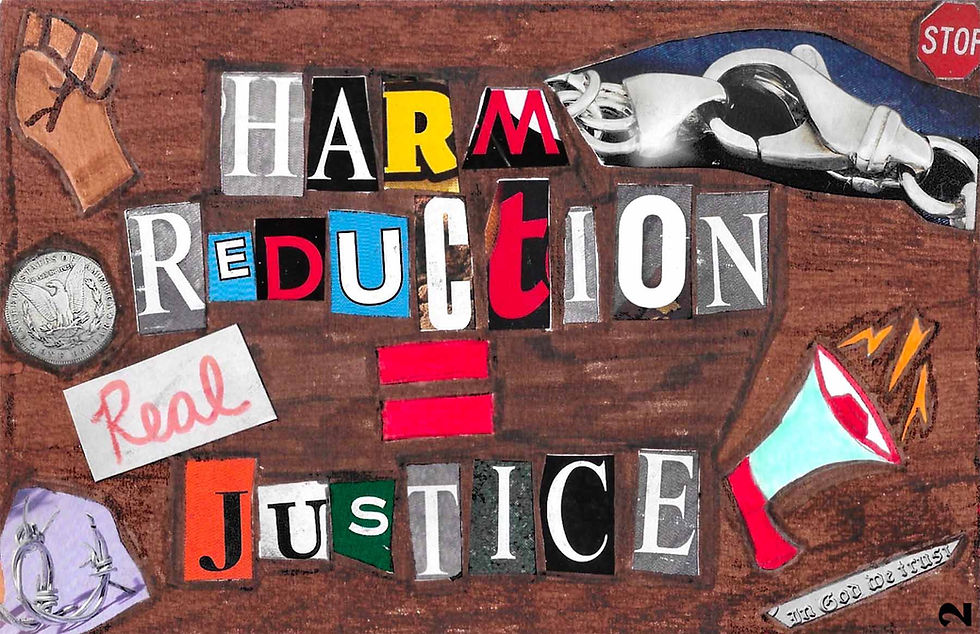


Art has a long history of political intervention to counter the war on drugs, as art is deeply intertwined with the underground origins and punk ethos of activist politics of harm reduction. Art has been utilized in the harm reduction movement to provide education, generate acceptance and empathy, and to reimagine society’s role in nurturing its most vulnerable community members.
The power of art lies in its ability to change our perspectives, engage in critical reflection, process emotions, and spark imagination for social change. However, the arts remain vastly untapped in social science curricula, even as Blooms Revised Taxonomy, a widely used pedagogical framework used to guide learning outcomes in teaching and charts six conceptually unique levels of cognitive learning, now considers “creating” as the apex of demonstrating critical thinking skills.

If art is all about creating and central to the history of harm reduction as a form of resistance to the War on Drugs, then why not return to this foundation as ateaching tool and way to disrupt harmful narratives?

In this spirit, we collaborated in a “Drugs & Culture” course offered through the Anthropology Department at UCR. To center harm reduction philosophies through the arts, we incorporated art workshops into the curriculum to generate a deeper understanding of the course materials and discussions about drug use and its effects within our society.
For students, art helped clarify ways to reduce stigma against people who use drugs, critique harmful systems of racialized violence, and collectively center community care and compassion. We have taught two versions of the class so far; check out the class zines we produced -
The Collaborative Zine of Drugs & Culture, Volume I & Volume II.
We also have a pedagogical chapter forthcoming in an edited volume about Comix and Community!

The Collaborative Zine of Drugs & Culture
Vol. I
Collaborative Zine of Drugs & Culture
Volume I

The Collaborative Zine of Drugs& Culture
Vol. II

The Collaborative Zine of Drugs
& Culture
Vol. I
*click to enlarge image*


The Collaborative Zine of Drugs
& Culture
Vol. II
*click to enlarge image*


